
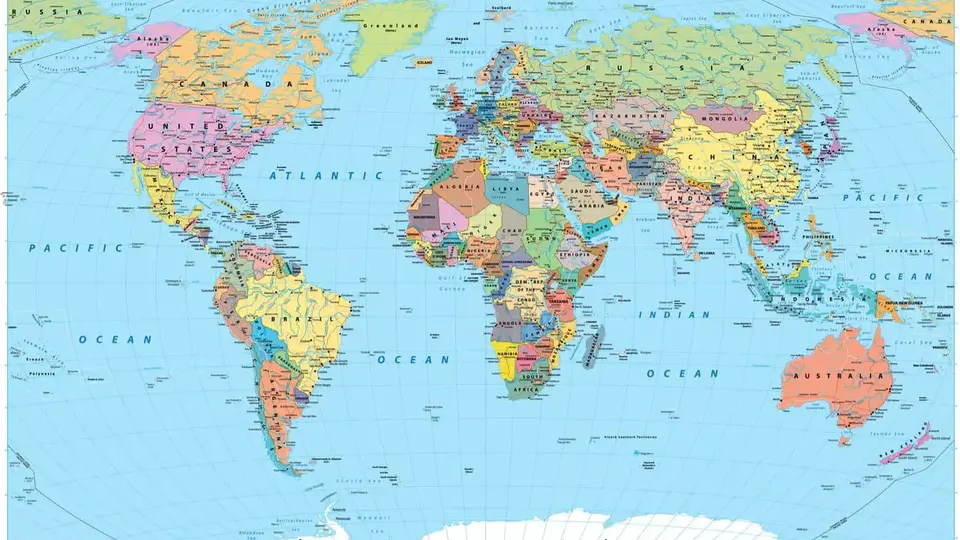
The official answer to how many countries there are in the world is 195. That is 193 UN member states plus two observer states – the Vatican and Palestine. At the same time, travelers, bloggers and some analysts use their own lists and explain how many countries they count, taking into account partially recognized territories and special regions.
How the Definition of a State Changes the Answer to How Many Countries There Are
To answer honestly how many countries exist in the world, it is not enough just to list them – you also need to agree on the terms. In everyday life, people usually call any territory with a flag and a government a country. In international law, the rules are stricter. When experts count how many countries there are in the world, they look at whether an entity meets the basic criteria of statehood. If at least some of these conditions are not met, the status of the territory becomes disputed.
Key reference points that decide how many countries make it onto the list:
- Permanent population. Not a temporary administration, but real long-term residents.
- Defined territory. At least roughly defined borders that other states recognize.
- Own government. A government that actually governs, not just exists on paper.
- Capacity for international relations. The ability to sign agreements and maintain diplomacy independently.
The more strictly a source follows these rules, the lower its answer will be to the question of how many countries there are in the world. If the author takes a broader view and adds autonomous regions or disputed territories, the number goes up. So the first clarification is always simple: what exactly are we counting when we ask how many countries there are in the world.
How Many Countries There Are – The UN’s Official Approach
The easiest way to find out how many countries are officially recognized in the world is to look at the membership of the United Nations. The UN is the baseline that most encyclopedias, school textbooks and international reports rely on. If you ask how many countries in the world are UN members, the answer is 193. These are states that:
- have full membership;
- take part in voting;
- are officially recognized by the other members of the organization.
There are also two observer states:
- the Vatican (the Holy See);
- the State of Palestine.
They do not have full membership, but they are de facto sovereign states with diplomatic missions and recognition from a significant part of the international community. That is why, when educational materials or exams ask how many countries there are in the world, 195 is treated as the correct answer.
So if there are no extra explanations, the question “how many countries are there in the world” usually implies 195. This number is the standard for official answers today.
Where the Number 197 Comes From and Why Some People Count More Than 200 States
Even though the official answer to how many countries there are in the world is 195, articles for travelers often mention the number 197. It appears when two extra territories are added to the list of 195 because they have all the features of practical independence but a complicated legal status.
These are:
- Taiwan – a separate political and economic unit with its own government and army that is formally considered part of China under the “one China” policy;
- Kosovo – a territory that declared independence from Serbia and has been recognized by many European and other states, but not by all.
If an author decides that these entities should be counted, their answer to how many countries there are in the world will be 197.
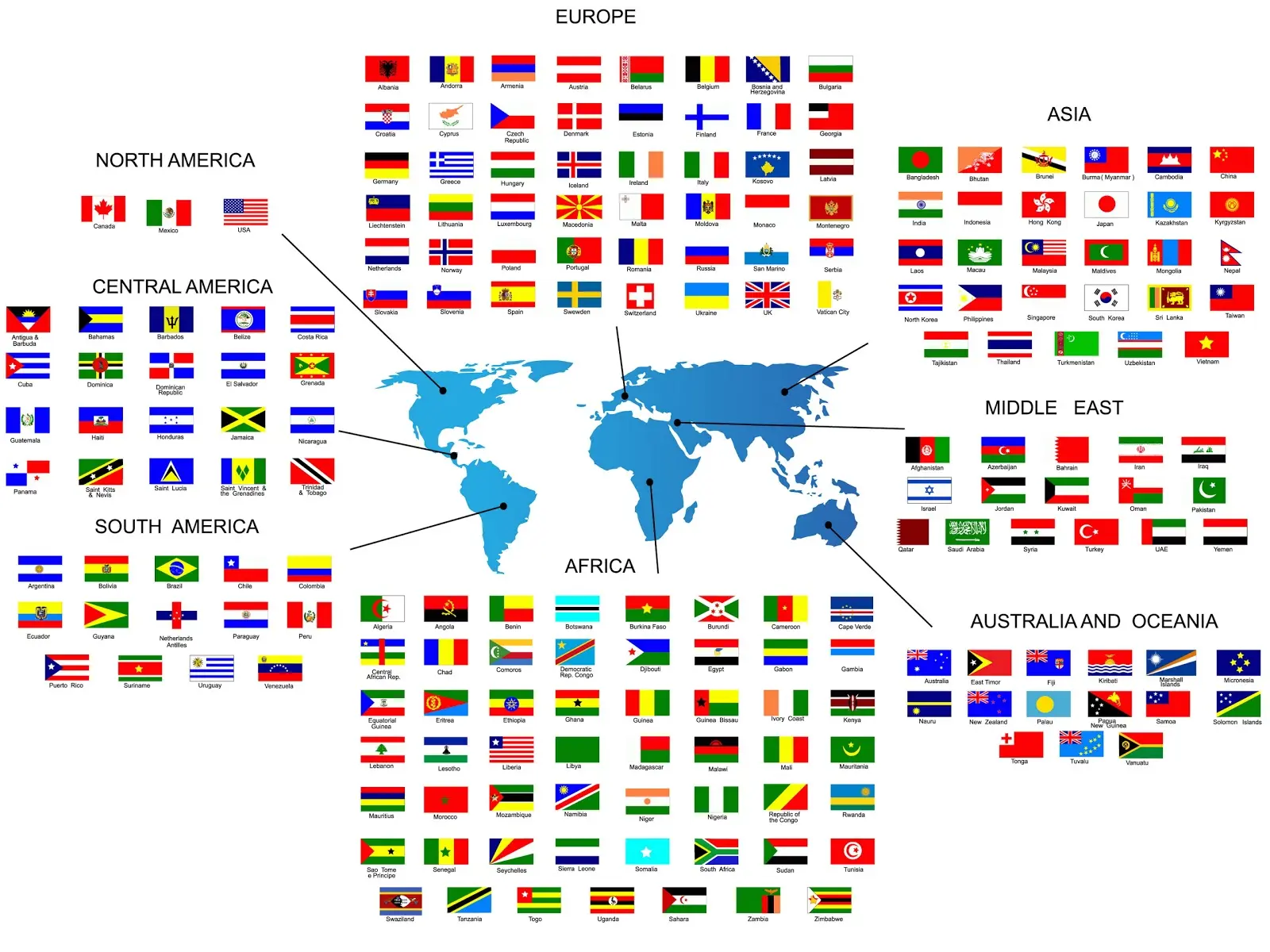
From here, the definitions get even broader. Some sites add to the list:
- other partially recognized territories;
- dependent territories (overseas possessions, autonomous regions);
- separate special administrative regions.
With this approach, the answer to how many countries there are in the world can reach 210–215 or even go beyond 230. In practice, that becomes a list of all political and geographic units, not just sovereign states. So any number above 195 always needs an explanation of exactly who has been added to the count.
How Many Countries There Are if Partially Recognized States Are Included
A separate category that strongly affects how many countries different authors count is partially recognized states. They have governments, borders, and often their own currency and armed forces, but they do not have full international recognition.
The most notable examples that regularly appear in discussions of how many countries there really are in the world include:
- Taiwan – effectively a separate state, but its status is tied to China and the policies of most major powers;
- Kosovo – partially recognized, but still a subject of disputes;
- Western Sahara – a territory claimed by both Morocco and the Sahrawi Arab Democratic Republic;
- several regions in the Caucasus and other areas that have their own governing bodies but remain disputed in status.
If these are included, the answer to how many countries there are in the world shifts from the official 195 to 197 and higher. If they are excluded, the figure stays within the UN framework. In effect, partially recognized states are the “gray zone” that explains why different texts give different numbers for the same question: how many countries exist in the world.
How Many Countries There Are by Continent
Once we have sorted out how many countries exist in the world, it makes sense to look at how they are spread across continents. There are nuances here too, but for orientation people usually use a standard division into six macroregions.
How many countries there are in the world by continent
| Continent | Approximate number of countries | What to keep in mind |
| Africa | 54 | The continent with the largest number of independent states |
| Asia | 48–49 | Differences arise because of the status of certain territories |
| Europe | 44 | Some states are partly counted as Asian as well |
| North America | 23 | Includes Central American and Caribbean states |
| South America | 12 | The classic list of independent states |
| Australia and Oceania | 14 | Many small island states |
The difference of one or two units is explained by how exactly transcontinental states are counted and where the notional boundaries between regions are drawn. But in total these figures still line up – the number of countries that officially exist in the world matches this breakdown. Today there are the most states in Africa and the fewest in South America. For many readers, this is a surprising but telling fact that helps them better picture the political map of the planet.
How the Answer to “How Many Countries Are There in the World” Has Changed Over a Hundred Years
Another useful way to look at the question of how many countries exist in the world is to see how the answer changed in the 20th and early 21st centuries. The number of states has not been constant – it grew in waves, alongside major historical processes.

If we simplify a bit, we can pick out several stages:
- Early 20th century – a world of empires and colonies, with far fewer than a hundred independent states;
- Mid–20th century – the wave of decolonization in Africa and Asia, a sharp increase in the number of states;
- Early 1990s – the breakup of the USSR and Yugoslavia, the appearance of new states in Europe and Asia;
- 2011 – the creation of South Sudan, the most recent widely recognized new state.
After that, there have been no major changes. So as of early 2026, the answer to how many countries there are in the world has stayed stable at 195, if we are talking about official data. History shows that this number is not “permanent”, but for now it has stayed relevant for more than a decade.
Is There One “Correct” Answer to How Many Countries There Are in the World
The most accurate short answer to the question “how many countries are there in the world” is still 195. This figure is based on the official UN list, includes 193 member states and two observer states, and is used in most educational and reference materials.
At the same time, the numbers 193, 197 and even 200+ are not “wrong”. They are simply answers to slightly different versions of the question:
- how many countries in the world are UN member states;
- how many countries exist if partially recognized states are included;
- how many “countries” a traveler wants to count if they ignore legal formalities.
So when answering “how many countries are there in the world”, it makes sense to clarify which logic you are using for the count. For school and everyday use, 195 is enough. For a deeper conversation about international politics, the details behind that number matter. They show how dynamic and changeable the modern political map really is.